
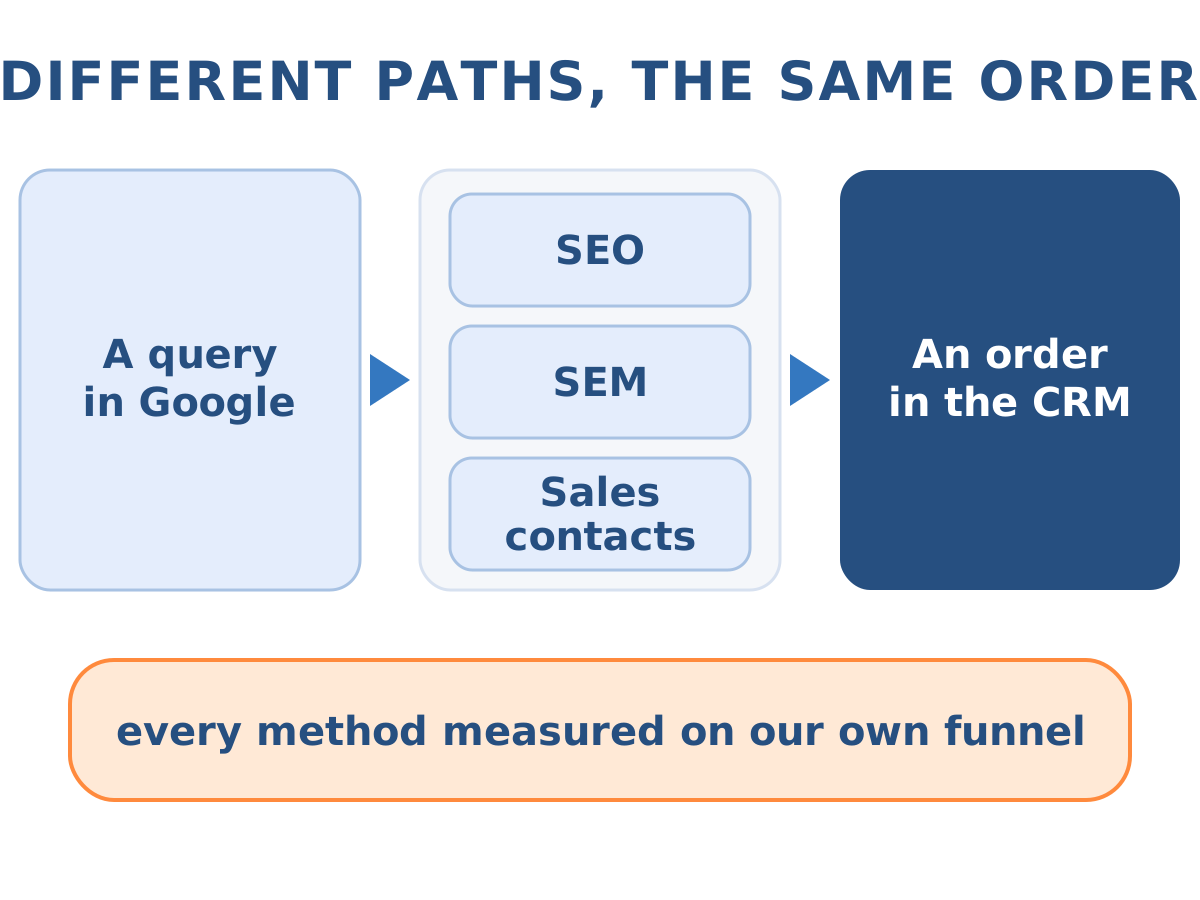
The lead generation lab
The figures on this page come from the funnel of a technology-sector company, measured from the first search visit to the order recorded in the CRM. We read a full year that closed nine months earlier: with a sales cycle counted in months, an earlier reading catches half the orders and overstates performance.
Cost per lead has three values, depending on the denominator
Measured. Cost per lead from Google Ads in foreign markets, in drySEO lab data, is PLN 73, PLN 237 or PLN 452 — same market, same campaign spend, divided by:
- PLN 73
- all leads from those markets
- PLN 237
- leads carrying a campaign parameter
- PLN 452
- conversions counted in the ad panel
The 6.2× spread comes from the definition alone. A calculator built on these three denominators sits on the cost page.
Measured. The ad panel shows 1.4–1.9× fewer conversions than the CRM (leads with a campaign parameter in the CRM divided by panel conversions; a third system agrees within 0.4 percentage points, drySEO lab data). The cause is privacy: browsers restrict cookies, so Google Ads loses the user between the ad click and the form submission, and the panel always sees less. The fix is the GCLID, the click identifier the site stores on entry and passes to the CRM with the enquiry. Only then can a lead be tied to its campaign, and cost per lead calculated from a denominator that really exists. Whoever knows where leads come from can budget, and whoever budgets can work out ROI.

Who we work with
We work with companies where hardware production goes hand in hand with firmware, software and AI: high-tech, electrical and electronic equipment, AI and robotics, telecommunication systems, defence. Such a company's product is technically complex and high-priced, needs technical support and after-sales service, and is sold by building B2B or B2G relationships. The decision sits with a committee and takes months, and the path starts with an engineer searching for a solution before they know the brand.
Why selling a technical product takes many contacts
With a complex product, many contacts are the norm: the buyer takes on a risk that one conversation cannot settle. The buying committee, a cycle counted in months and the number of contacts are one mechanism seen from three sides.
From practice. In drySEO lab data a new client most often converts after the fifth contact, and sometimes after the twelfth (a directional value from the lab's practice; denominator: contacts with the same recipient up to the enquiry).
Industry benchmark. A distribution B2B sales has known for years: most sales close between the fifth and the twelfth contact, while close to half of salespeople skip follow-up. drySEO has used it as a yardstick for a decade, and practice bears it out.
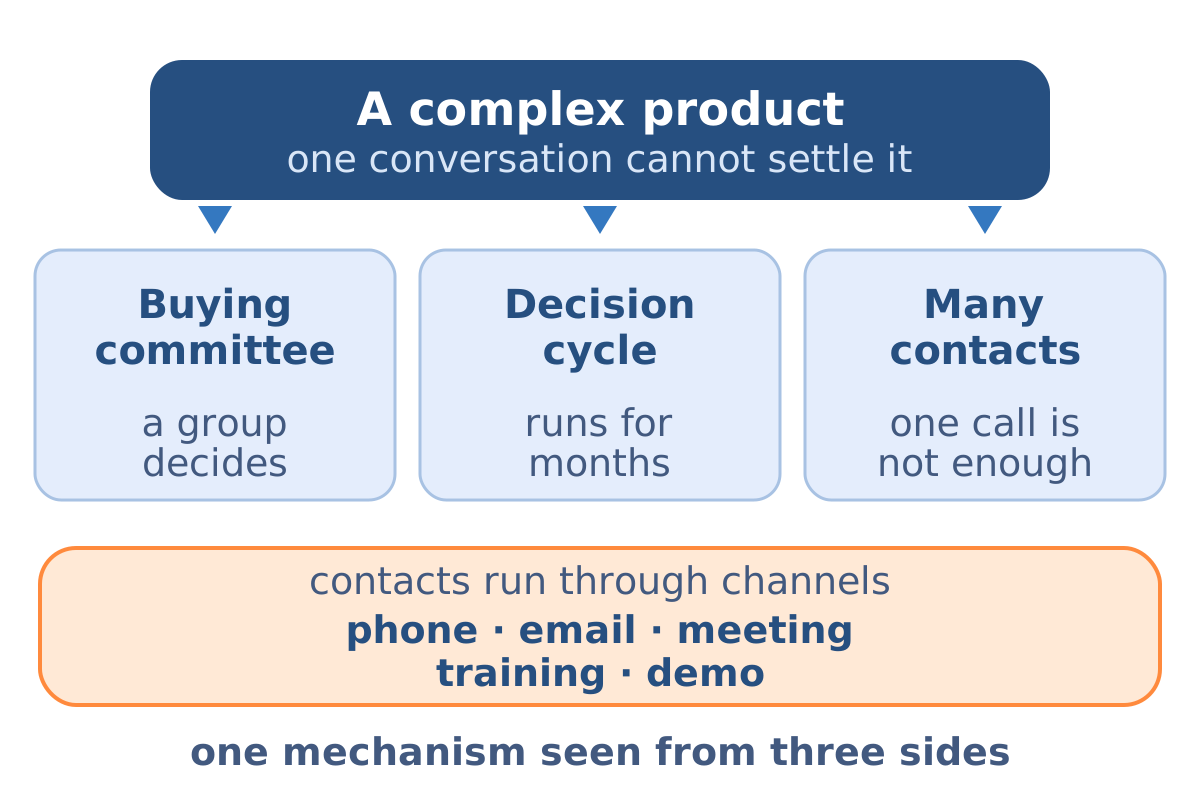
The phone carries the process; email sends documents and covers the time between calls, and the typical mistake is giving up after two attempts. A salesperson makes the fifth call when there is something to call about, so the reason for contact — a business breakfast, a customer showcase, a technical training, a demo — is a product of marketing. We plan a lead's lifecycle at the start, together with the list of such reasons.
Every contact builds value or uniqueness: a visit to the customer shows that the product solves their specific problem, while an application engineer with a comparable implementation, and an invitation to the company, show the people behind the product. Proving both at once takes that many contacts. The cadence of contacts is developed on the lead nurturing page.
B2B lead generation from search
SEO and SEM are the channels through which a lead reaches the company. The full mechanism, from demand in search to qualification in the CRM, is covered by Lead Generation: Marketing Engine for Business Growth.
Organic search that earns leads
Visibility is built in classic results and in AI-generated answers. The same thing feeds both layers: a topic architecture and content that puts the answer at the start of each section. The method is laid out in B2B SEO.
SEO and SEM services
A lead is the unit we bill, and external costs — ad budget and developer time — you pay directly to the supplier. The scope of work is set out in SEO and SEM Services for B2B Lead Generation.
How a project starts
Every project opens with a free diagnosis answering four questions:
- what is the market value of an order for you, and what share of enquiries closes today,
- where demand leaks — in content, authority, the landing page, the measurement, or in follow-up, meaning how many times you contact a customer,
- what can improve within weeks, and what takes a quarter,
- who on your side will own the system once it runs.
The result stays with you: a map of your funnel and a list of the numbers you are missing.
After the diagnosis we start with a test, not a year-long rollout. We build landing pages and a content silo — usually on a subdomain you provide, so the work rests on the authority your domain already has. We set up campaigns and measurement with a campaign parameter on the CRM side, and over the first months we optimise on the data that comes in. You pay the ad budget directly to the supplier; it never passes through us.
If leads arrive and it makes sense, we build it out. If they don't, the money went on advertising that was showing your company in the meantime anyway.