
SEO and SEM Services for B2B Lead Generation
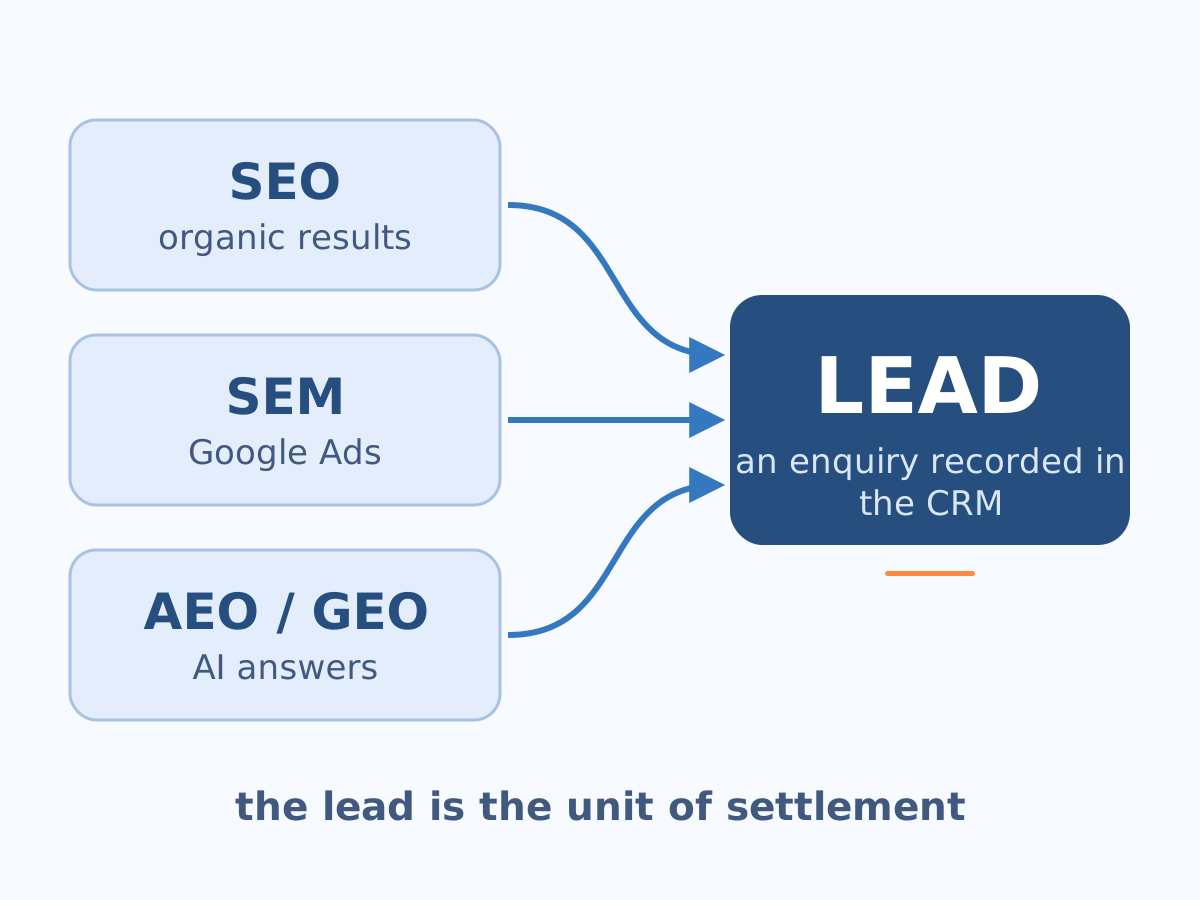
The product is a lead. Everything below — content architecture, Google Ads, tracking, reporting — exists to produce commercial enquiries and to make them countable. That is also the unit the work is billed in.
What do SEO and SEM mean, and where does AI search fit?
SEO is search engine optimization: earning visibility in organic results. SEM is search engine marketing: buying visibility with paid search campaigns, most often in Google Ads. AI search is the same demand arriving through a generated answer instead of a list of links.
The distinction matters in practice because the two channels fail differently and recover differently. Organic search compounds: work done in one quarter keeps paying in the next, and a technical mistake keeps costing until it is fixed. Paid search responds within days: a budget change, a keyword change or a landing page change shows up in the data almost immediately, and stops the moment the spend stops.
Run together, each one informs the other. Paid campaigns reveal, in weeks rather than quarters, which phrasings people actually convert on — and that evidence goes straight into the organic content plan. Organic data shows which topics attract qualified demand at no media cost, which is exactly where paid budget can be withdrawn and redeployed. The gain is a shorter feedback loop on one question: which queries turn into orders.
AI search sits on top of both. The engine breaks a query into sub-queries, assembles an answer from fragments of pages, and names some brands rather than others. The technical foundation it draws on is the same one classic SEO builds — crawlability, structure, consistent facts about the company — which is why the AI layer is an extension of the search work, treated as its own channel with its own measurement, covered in our AI SEO guide.
Content designed for AEO/GEO and classic search
Companies receive complete topical hubs for their own site, built to be found by a search engine and quotable by an answer engine.
Topic architecture
A pillar page with its supporting pages, planned so that the term cloud is covered; the page count follows from that coverage.
Product and problem content
Builds authority in the subject: what the technology does, which constraint it removes, what it is compared against, what it costs a buyer to get the choice wrong.
Text structures readable by AI search
A heading that states a question, an opening sentence that answers it in full, atomic sections, evidence beside the claim, and tables and lists carrying the data directly.
Content for external publication
Expert articles and PR material designed for distribution and reputation, because a model reads mentions of a brand in other people's texts as well as the links pointing at it.
A separate deliverable, and often the one that changes the most: requirements for the client's own team. Marketing and webdev receive specifics — what to change, on which page, and how to verify it worked — written as tasks ready to schedule.
Google Ads and conversion tracking
Paid search is run as the fast half of the same system, and its main output beyond leads is evidence.
- campaign setup, structure and ongoing optimization in Google Ads;
- matching keywords and messages to intent, with the buying-intent set separated from the research set;
- guidance for the client's developers on conversion tracking, so that what the panel counts and what the CRM counts can be reconciled line by line;
- reporting from the perspective of leads and pipeline, with every metric carrying its definition.
That last point carries weight, and the laboratory section below shows the size of the error it prevents. The full paid-plus-organic mechanics are described on the page about running paid and organic search as one system.
The drySEO laboratory: methods validated on our own funnel
drySEO runs its own B2B account as a measurement testbed. A method is tested on our own funnel first — from the first search-engine visit to the order recorded in the CRM — and a method that survives that test is the one recommended to a client. Hence the engineering order of operations: numbers first, recommendation second.
What that gives a client. A method reaches your account with a measured result already attached, and the measurement behind it covers a full year, read nine months after the period closed, so that orders from long buying cycles had time to land in the count. That is why every figure in a report carries its denominator: you can see what was divided by what, run the same count on your own funnel, and compare one quarter with the next.
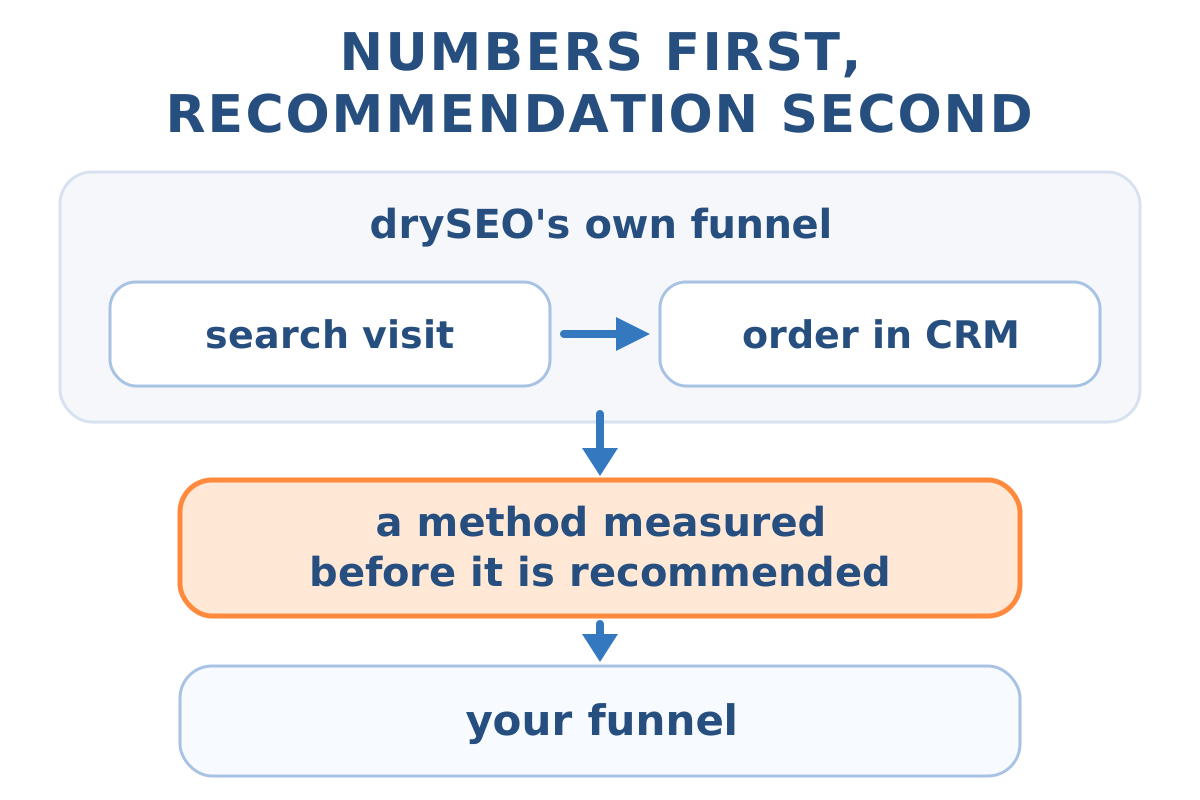
Your own result comes out of your own funnel. What transfers is a method that was measured before it was recommended, and the measure that shows how it performs in your company.
The shortest example of what such measurement yields: the same spend on the same campaigns produces several different costs per lead, depending on what goes into the denominator. The measured figures and the full arithmetic sit on the cost page linked from the billing section below.
The laboratory is also the reason the reporting looks the way it does: the same questions we answer for a client are the ones we had to answer for ourselves first. The lab's own page goes into how it is run and where its numbers come from.
How the work is billed: the lead is the unit
Our product is a lead, so the lead is the unit of settlement. External costs — advertising budget and developer time — you pay directly to the supplier, which keeps the cost of the medium visibly separate from the cost of the work on the system.
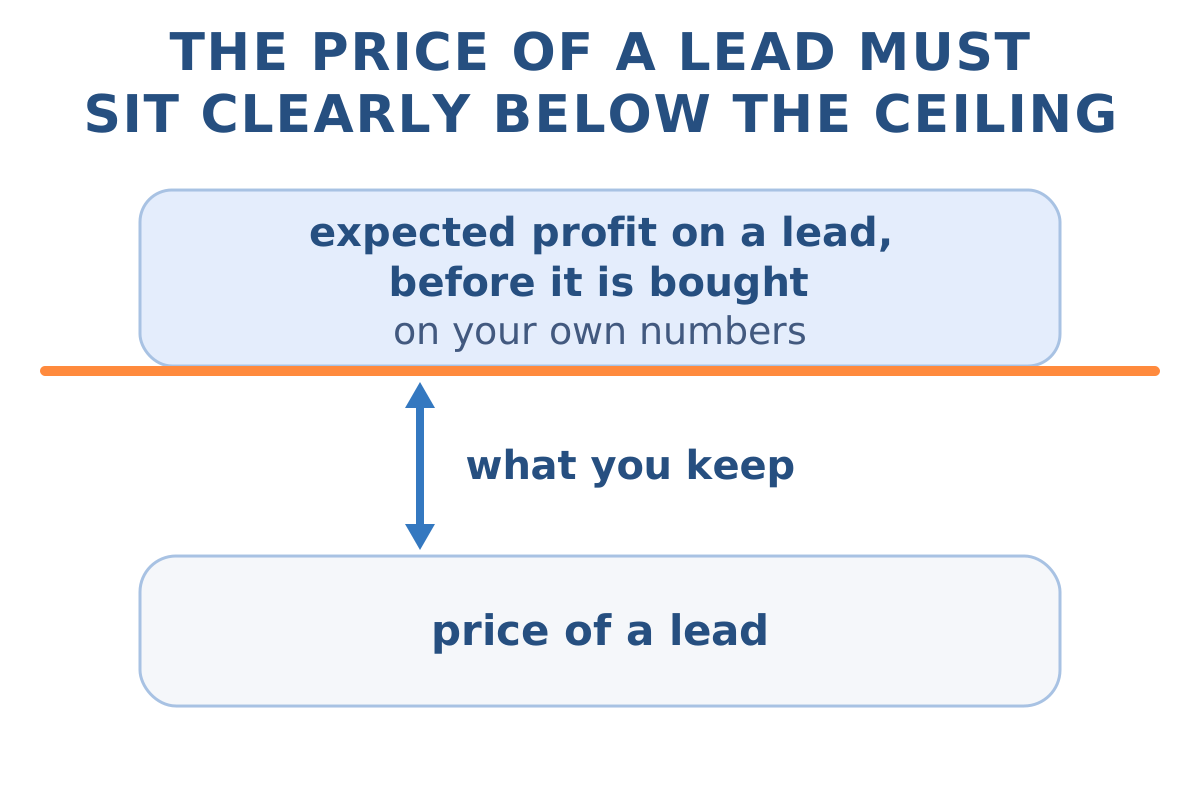
The price of a lead comes from arithmetic. It is derived from two figures established at the start: what an order is worth to you, and what share of enquiries closes into an order. Multiply your margin on an order by your close rate and you have the expected profit a single lead carries before anyone buys it; the price you pay has to sit far enough below that figure for a real part of that profit to stay with you. The calculation runs on margin rather than revenue, because margin is what repays the cost of the lead — the same arithmetic run on revenue produces a ceiling several times too high and a deal that looks affordable while losing money.
Close rate depends on market more than most calculations assume. On the drySEO laboratory's own funnel the measurement gives 13.6% — orders divided by commercial enquiries, range 11.6–15.0% depending on the denominator (drySEO lab data, measured from full-year exports). Beside that measurement stands a directional observation from the laboratory's own practice: on markets furthest from a client's core business the same ratio can run at roughly 5–6% (drySEO lab data, directional from practice, not an export — same denominator). The distance between the two is about 2.5×, which is why the price of a lead is derived from numbers and set separately for each market you enter.
We size the model on the weakest scenario, so that it still holds when a market turns out harder than assumed. Everything else — the exact figure, the cadence, the scope — comes out of your numbers, and that is why the conversation starts with them. The denominators behind those numbers are set out in our cost-per-lead guide. For how the same settlement works when a whole programme is outsourced, see the outsourcing page.
What the free diagnosis answers
A project starts with a diagnosis that answers four questions:
- what an order is worth to you, and what share of enquiries closes into a sale today;
- where demand is leaking — in the content, the authority, the landing page or the measurement;
- what can be improved in the first weeks, and what needs a quarter;
- who on your side will take over the system once it is running.
The diagnosis is free, and its output stays with you: a map of your own funnel and a list of the numbers still needed before that funnel can be compared over time. We run it for the companies we work with — technology businesses selling B2B and B2G on international markets. How the whole funnel is assembled is described in our guide to B2B lead generation.
Who drySEO works with
drySEO specialises in B2B and B2G, and particularly in lead generation for high-technology companies, defence among them, selling a complex, expensive product into a long decision cycle on demanding export markets. Content for these companies demands a specific approach and a long apprenticeship in the subject matter — the reader is an engineer or a technical buyer, the claims have to survive their scrutiny, and the purchase involves a committee rather than a single person. drySEO's specialists have run SEO and SEM campaigns on major international markets; a full year of one such programme is counted source by source in the case study.
Two consequences shape the work. The buying cycle is long, so the content has to hold a prospect across months of research before a first enquiry arrives. And the qualifying detail is technical, so the pages that generate enquiries are usually the ones that state specifications, limits and comparisons plainly.
SEO and SEM for technology and manufacturing companies
Visibility and content quality are critical to building trust in a brand.
Outsourced lead generation, in drySEO's case, means producing SEO content for technical products, written for a technical B2B and B2G reader and for building trust in Google's AI Mode. Combined with Google Ads, it speeds up building a strong brand both at home and on foreign markets.
B2B
Two sectors in which a lead is an enquiry about a technical solution, and the decision on the buyer's side is made by a team rather than one person:
- Leads for technology companies — Why the first reader to convince is the engineer evaluating the product rather than the budget holder, and what follows for content.
- Leads in sales to industry and public institutions — How the route to the engineer who finds you differs from the route to the people who sign off the purchase.
B2C
Two consumer markets where the same principles work with a different audience:
- Leads for real estate agencies — What to do with an enquiry when the client can transact only once and the decision can stretch over months.
- Leads for law firms — How a search for legal help becomes an enquiry that reaches a named person in the practice while the problem is still pressing.
How a project runs
Four steps, in this order:
Diagnosis
Where demand leaks today in search: content, authority, landing page, measurement, or paid campaigns.
Plan
Strategy, priorities, topic architecture, schedule, and the definitions every metric will be reported under.
Production
Content to the AEO/GEO standard; webdev implements the recommendations on the site; campaigns go live in parallel.
Measurement and iteration
A report saying what is growing, what is holding flat, why, and what changes next.
What is built is a lead generation system — strategy, content, campaigns, measurement — and it is handed over to your team with documentation and procedures. Before hiring a specialist, it is worth owning the machine they will operate. The business development page picks up the next question: how that system fits the go-to-market plan and the marketing function.
How we run the engagement
The engagement runs on two lists of duties agreed in the first week: strategy, content, campaigns and measurement sit with us, while implementation on the site, product knowledge and decisions on scope sit with you. Every item carries a named owner and a date, so at any moment it is clear whose move comes next.
What the work needs from your side
Three things set the pace: access to the systems holding the evidence (analytics, CRM, ad panel, the site itself), developer time to implement the requirements we write, and a product expert who answers technical questions, since the qualifying detail in technical content comes from them. We also agree three roles on your side at the start — who approves content, who publishes it, and who signs off a stage. In B2B these are usually three different people, and naming them early is what keeps a quarter on schedule.
The working rhythm
Work runs in short cycles: a prioritised task list at the start of each one, and a report at the end in which every figure is counted under the definition agreed in the plan. Tasks and submissions sit on one board of stages, so a build-up at any stage stays visible while it is still a queue. One channel carries the communication and the same task list carries the decisions, which keeps the requirements legible to the developer implementing them.
Handover
Each stage closes with an acceptance: what was produced, what went live, what the measurement showed, and what enters the next cycle. At the end your team receives the system together with its documentation and procedures — topic architecture, content templates, metric definitions and the tracking configuration — in a form your own people can keep running.
Is SEO still worth it with AI search?
Yes, and the reason is that AI answers are assembled from the same index that organic results are ranked from. A page a search engine can crawl, parse and trust is the only kind of page an answer engine can quote — so the foundation that made SEO work still decides who is eligible to appear.
What changes is where the return shows up. On informational queries — “what is”, “how does it work”, “how long does it take” — a generated answer increasingly absorbs the click, and the payoff moves from traffic to a brand mention inside that answer. On queries with buying intent — services, suppliers, a category name with a B2B qualifier — the user still wants to see the vendor, compare, and check credibility, so the click and the lead survive intact. For a B2B company, where the money sits on the second kind of query, that is the more important half of the market.
The honest version of the answer has three parts. Visibility measured in impressions is worth less than it used to be. Visibility measured in mentions and enquiries is worth more, because the pool of sources a model is willing to quote is much smaller than the pool of pages a ranking can hold. And the discipline that decides between those two outcomes — evidence in the content, consistent entity data, a measurable funnel — is the same discipline that made organic search work before any of this. The organic side of that work is set out in our B2B SEO guide.
How long does it take to see results from SEO and SEM?
Paid search typically produces measurable leads within weeks; organic and AI visibility usually move on a scale of months, and a full lead-generation system generally takes around half a year to stand up. Those three clocks run at once, which is the practical argument for starting both channels together.
What tends to happen in each window:
Weeks 1–6, paid
Campaigns start returning enquiries and, more valuably, evidence: which queries convert, what a qualified enquiry costs under each definition, where the landing page loses people. Six weeks is also about the shortest honest window for judging a campaign — a shorter reading mostly measures noise.
Months 1–3, foundation
Technical hygiene, entity consistency, the topic architecture and the first hub pages. Rankings move little here; what moves is eligibility.
Months 3–6, organic and AI
Hub pages mature, mentions begin appearing across a fixed prompt set, organic enquiries start arriving from queries nobody bid on. Mentions in AI answers often appear earlier than organic traffic, because a model needs a citable fragment rather than domain history.
Around month 6, the system
Content, campaigns, tracking and reporting operate as one loop, and the question shifts from “is it working” to “which part to push next”.
Two conditions decide whether that schedule holds: implementation speed on the client's side, and whether the measurement was agreed before the work started. Settling the definitions first keeps the quarter on the funnel.
Frequently asked questions
What is the difference between SEO and SEM?
SEO earns organic visibility and compounds over months; SEM buys visibility in paid search and responds within days. Run together, paid data shortens the organic learning cycle and organic coverage reduces what has to be bought.
Is Google Ads SEO or SEM?
Google Ads is SEM — paid search advertising. SEO covers the organic results underneath the ads. The two share the same query data, which is the practical reason for running them under one plan.
What services does a search engine marketing provider offer?
In this case: topic architecture and content built for organic and AI search, external publication material, Google Ads setup and optimization, guidance on conversion tracking, and reporting expressed in leads and pipeline. The output is a system your team can take over.
How do I choose a search engine marketing partner?
Ask how they define a lead, which denominator their cost-per-lead uses, and how they will reconcile the ad panel with your CRM. Precise answers to those three produce reports whose numbers stay comparable from quarter to quarter, which is the property that makes a report worth acting on.
How do you measure success?
On leads and pipeline, with every metric carrying its definition. Rankings, impressions and clicks serve as diagnostics along the way, while leads and pipeline are the result.
Who implements the changes on the site?
Your developers, working from specific requirements we supply: what to change, on which page, and how to verify it worked. Where a team is missing, the developer cost is paid directly to the supplier, so the cost of implementation stays visible and separate.