
A B2B buyer persona is a semi-fictional profile of the ideal customer, built from data about real customers: who they are, what they need, what holds them back from buying and where they look for information. The persona gives direction to everything that makes up B2B lead generation — from channel choice to the wording of a message. This guide covers what a buyer persona should include, how to create one in five steps, the three types of B2B buyers behind most decisions, how often to update a persona, and how it differs from an ICP and a target audience.
What is a B2B buyer persona?
It is a detailed profile of a representative of the customers a company wants to sell to. The profile has a name, a job title, goals, problems and habits — not because marketing needs fiction, but because a team writes better to “Marta, an operations director drowning in spreadsheets” than to “the SME segment, 50–250 employees”.
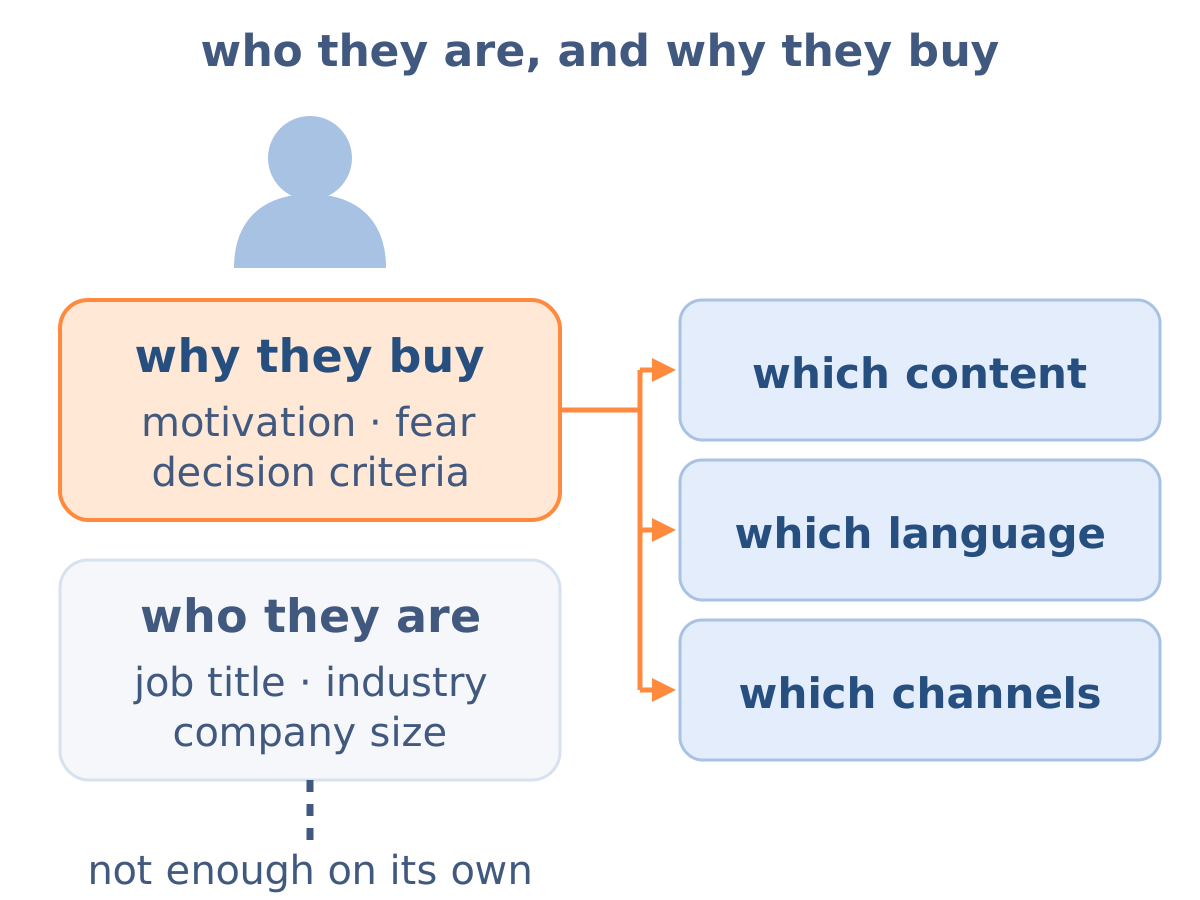
A persona answers one question: why does this person buy? Demographics say who the customer is. The persona adds motivation, fear and decision criteria, and marketing strategies follow from that layer — which content to create, which language to use, which channels to be present in.
The distinction that causes the most confusion is between a persona and an ideal customer profile. An ICP describes an organisation that fits; a buyer persona describes a human being inside it who has to be convinced. In B2B both are needed, because the company qualifies and the person decides.
What should a B2B buyer persona include?
A complete persona fits on one page and carries six elements:
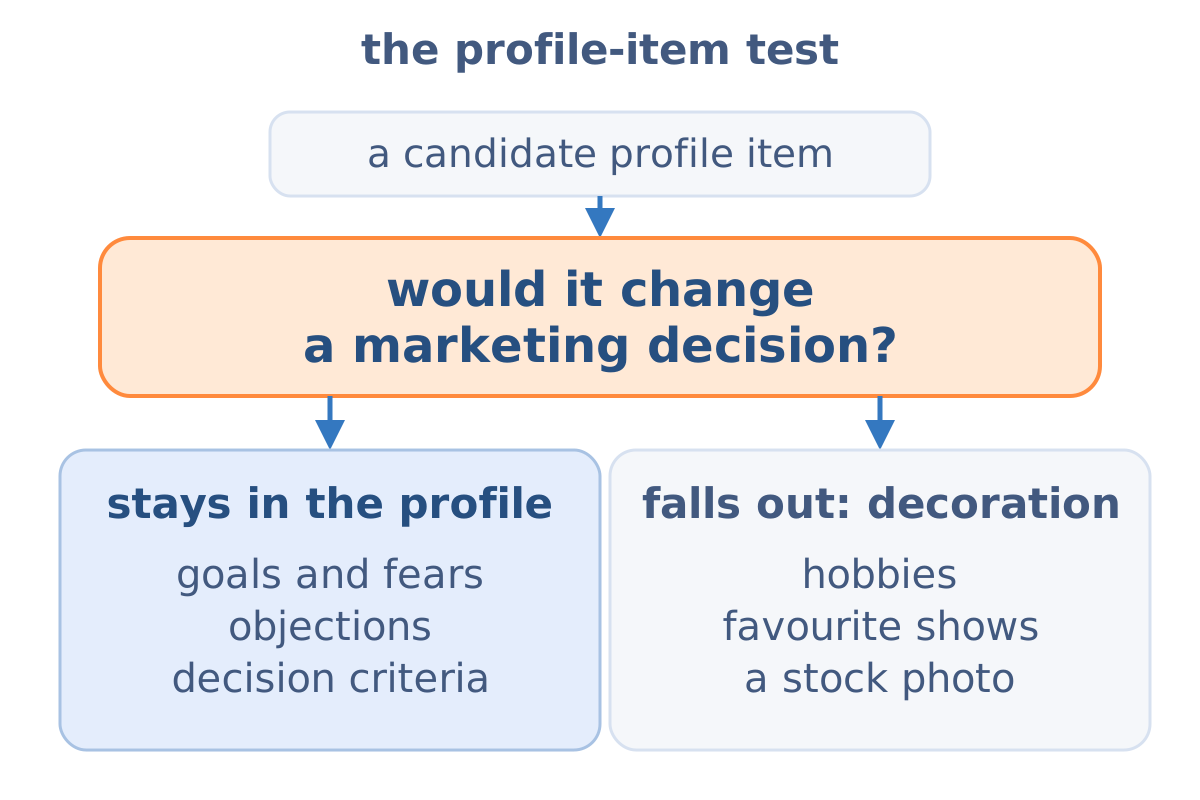
- Demographic and professional data. Job title, seniority, industry, company size — the filter that makes campaigns targetable.
- Goals. What this person wants to achieve at work: a result, a promotion, an uneventful quarter. That is what a message appeals to.
- Pain points. What frustrates them daily and what the problem costs them. Pain drives decision-making harder than the promise of a benefit.
- Information channels. Where they look for knowledge: search, LinkedIn, industry newsletters, peer referrals. That is where the brand has to be.
- Objections. What stops them from leaving a contact detail: fear of being spammed, the cost of switching, uncertainty about the supplier.
- Decision criteria. What they compare offers on: price, implementation effort, references, fit with tools already in place.
Everything beyond those six — favourite shows, hobbies, a stock photo — only lengthens the document.
How do you create a B2B buyer persona?
Creating a persona is an analytical exercise rather than a creative one — the profile is assembled from data about real customers, in five steps:
- Collect the data you already hold. CRM records and site analytics show who buys, how long the decision takes and which content customers read before purchasing. The best current customers are the pattern the profile is built from.
- Talk to customers. A handful of in-depth interviews per segment reveals what the data never contains: why they started looking, what they were afraid of, what tipped the decision. Surveys add scale, interviews add depth.
- Ask sales and customer support. Sales hears objections daily; support knows what customers ask after the purchase. It is the cheapest source of insight into motivation, and the one most often skipped.
- Split customers into segments. Where the data shows groups with genuinely different needs, each group gets its own persona. Detail on the split: B2B Target Audience.
- Write the profile down and put it to work. A persona starts working only when the team uses it while writing content, setting up ads and qualifying leads. A document nobody opens changes nothing.
Product teams benefit from the same profile, which is an argument for keeping it to one page: a persona that sales, marketing and product all read is worth more than three that each department maintains privately.
What are the three main types of B2B buyers?
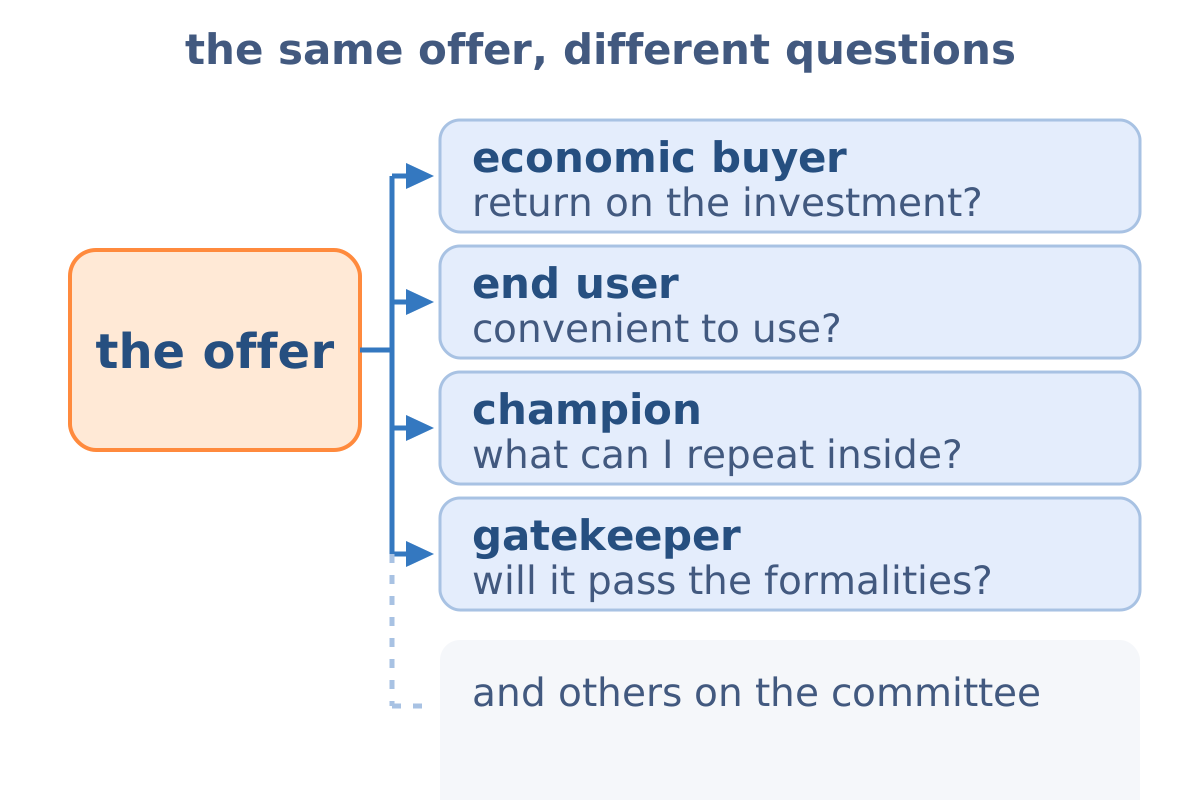
Three roles decide most B2B purchases, and they read the same offer with different eyes. Naming them is more useful than counting how many people sit in the buying committee, because each role needs a different argument:
The economic buyer
approves the budget and asks about return, risk and the cost of doing nothing. Usually senior, usually short of time, and usually reading only the first paragraph.
The technical buyer or evaluator
checks whether the product or service actually does what it claims and whether it fits the existing stack. This role can veto without being able to approve.
The end user
will work with the tool every day and judges convenience, learning curve and support quality rather than return on investment.
Two further roles shape the process without being buyers. The champion advocates the solution internally and sells it when the supplier is not in the room, so they need arguments that are easy to repeat. The gatekeeper — an assistant, a procurement team, legal — controls access to the decision-makers and can stall a deal for formal reasons alone.
In practice, personas for the two or three roles that most often settle the purchase are enough. Those profiles also feed lead scoring, since a contact matching the economic buyer persona is worth more points than a random registration — how that gets counted is covered in the conversion guide. Readiness signals often come from events inside the customer's company: a change of personnel, new regulation, the end of a budget year.
How does a buyer persona differ from an ICP and a target audience?
The target audience is a set, the ICP is a company, and the buyer persona is a person. The audience describes a broad slice of the market by shared characteristics and sets campaign reach; the ICP and the persona sharpen that slice at two different levels:
| attribute | ICP (Ideal Customer Profile) | buyer persona |
|---|---|---|
| Level of analysis | company / organisation (WHO buys?) | person / decision-maker (WHY do they buy?) |
| Key data | firmographic: industry, size, revenue, location | psychological: goals, motivations, fears |
| Purpose | selecting markets and qualifying companies | content and message personalisation |
| Role in the process | which companies to reach | how to convince the human inside them |
In B2C an ICP rarely appears — a target audience and a persona are enough. In B2B both are needed, and the ICP is also the precondition for Account-Based Marketing, where campaigns aimed at companies chosen by name require an exact definition of which companies qualify.
Building an ICP starts from firmographic data about the best current customers: industry, headcount, revenue, location, technologies in use. The pattern is the customers with the highest lifetime value and the lowest cost to serve, which is rarely the same thing as the largest. The profile is completed by red flags — characteristics of companies that proved unprofitable before: no budget, a problem too small for anyone to solve urgently, expectations nobody could meet.
What is a negative buyer persona?
A negative buyer persona is the profile of someone a company deliberately leaves out of its acquisition: a student gathering materials for a thesis, a competitor running research, a prospect with no budget who consumes sales time. More leads is better only up to the point where mismatched contacts raise the cost to serve and distort every conversion statistic above it.
The profile earns its keep in two concrete places: exclusion lists inside advertising platforms, and the qualifying fields on a form. Both are cheap to set up, and both keep working while everyone is busy with something else.
How many buyer personas does a company need?
One to three at the start — one per segment that genuinely differs in needs and buying process. More personas than the team can serve with separate content are personas on paper: if all of them receive the same message, the split does not exist. Additional profiles get added when the data shows a segment that buys differently, and the evidence for that comes from the CRM rather than from a workshop.
Content is the constraint that decides the number. Each persona implies its own angles, its own examples and its own objections answered — the workload behind that is covered in Content Marketing for Lead Generation.
How often should B2B buyer personas be updated?
Once a year as a standing review, plus at every material change: a new product, entry into a new market, a visible drop in campaign conversion, or a reorganisation on the customer side. Job titles rotate, information channels shift, and a persona written three years ago describes people who have moved on.
Three triggers are worth watching between the annual reviews, because each one invalidates part of the profile:
The channel mix moves
A growing share of decision-makers now begins research in an AI chat rather than in a search box, which changes the “information channels” line of every persona written before that shift.
Objections change
When sales starts hearing an objection that appears nowhere in the profile, the profile is already behind.
The leads that did not buy stop matching the negative persona
That is the earliest signal that the definition and the market have drifted apart.
The cheapest form of update is a quarterly read of the closed-lost reasons in the CRM. It takes an hour and it corrects a persona faster than any workshop — and whether the correction worked is visible in the numbers described in the lead generation metrics guide.
What are the most common mistakes when building buyer personas?
Four, and they compound:
The imagined persona
Written in a workshop without a single customer conversation, it confirms what the team already assumed and resonates with no one outside the room.
Stopping at demographics
Age and job title say who the customer is; they say nothing about why anyone buys.
Excess
Ten personas with hobbies and invented quotes that no one consults.
No deployment
The profile exists, while campaigns, content and the funnel carry on exactly as before.
Data collection carries an obligation of its own: interviews and profiling fall under GDPR, which means consent, data minimisation and a clear statement of why the data is being gathered.
Frequently asked questions about B2B buyer personas
Is a buyer persona worth building in a small company?
Yes — in a small company a targeting error costs relatively more. One persona built from five customer conversations and the CRM is enough, and a formal workshop is unnecessary.
What is the difference between a buyer persona and a user persona?
The buyer persona decides on the purchase and holds the budget; the user persona works with the product daily. In B2B these are frequently two people with conflicting priorities — cost and return on one side, convenience on the other — and the offer has to answer both.
What information do you need before writing the first persona?
Three sources cover it: CRM data on who bought and stayed, analytics on what they read before the decision, and what sales hears as objections. External research extends the picture; it does not start it.
Does a persona need a photo and a name?
A name helps the team write to a person. A photo changes nothing measurable. Neither belongs in the section where decision criteria are recorded.
How do you tell a good persona from a presentation?
By how many decisions it changes. If campaigns, content and scoring look the same after it was written as they did before, the document is a presentation.