
A lead generation campaign is a planned set of marketing activities whose purpose is to obtain contact details from potential customers. It is the basic instrument of lead generation: it converts advertising budget and content into a list of people ready for a conversation.
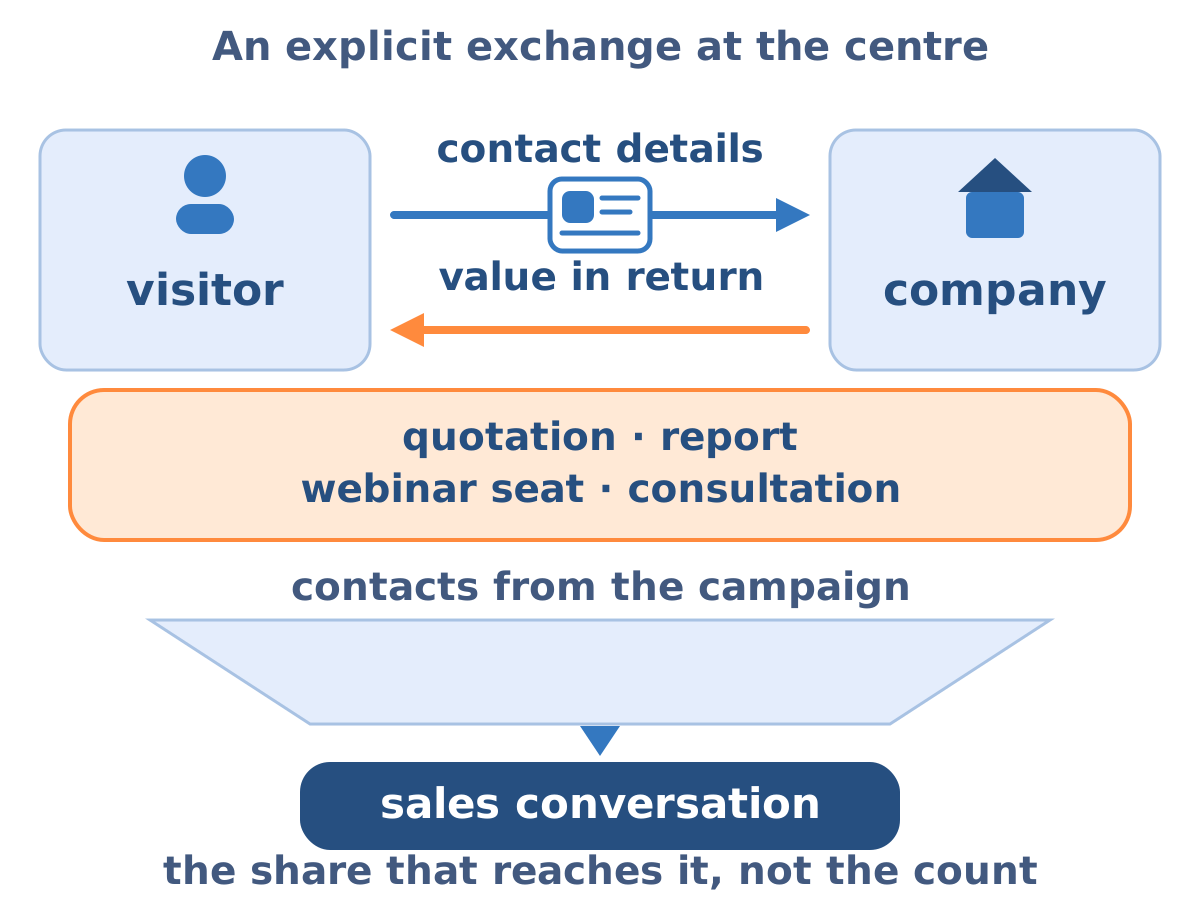
The exchange at its centre is explicit. A visitor gives contact details and receives something of defined value in return — a quotation, a report, a webinar seat, a consultation. This page covers the types of campaign, how to run one in six steps, how to judge whether it worked, what it should cost, and the mistakes that spoil results.
What is a lead generation campaign?
A lead generation campaign collects contact details — most often an email address or a phone number — from people interested in an offer, in exchange for something worth having.
It has three intermediate goals, each leading to the sale: obtaining the contact, creating interest in the offer, and starting the relationship that decides a B2B transaction. Success is measured on the quality of the contacts rather than their count — specifically, the share that progresses to a sales conversation.
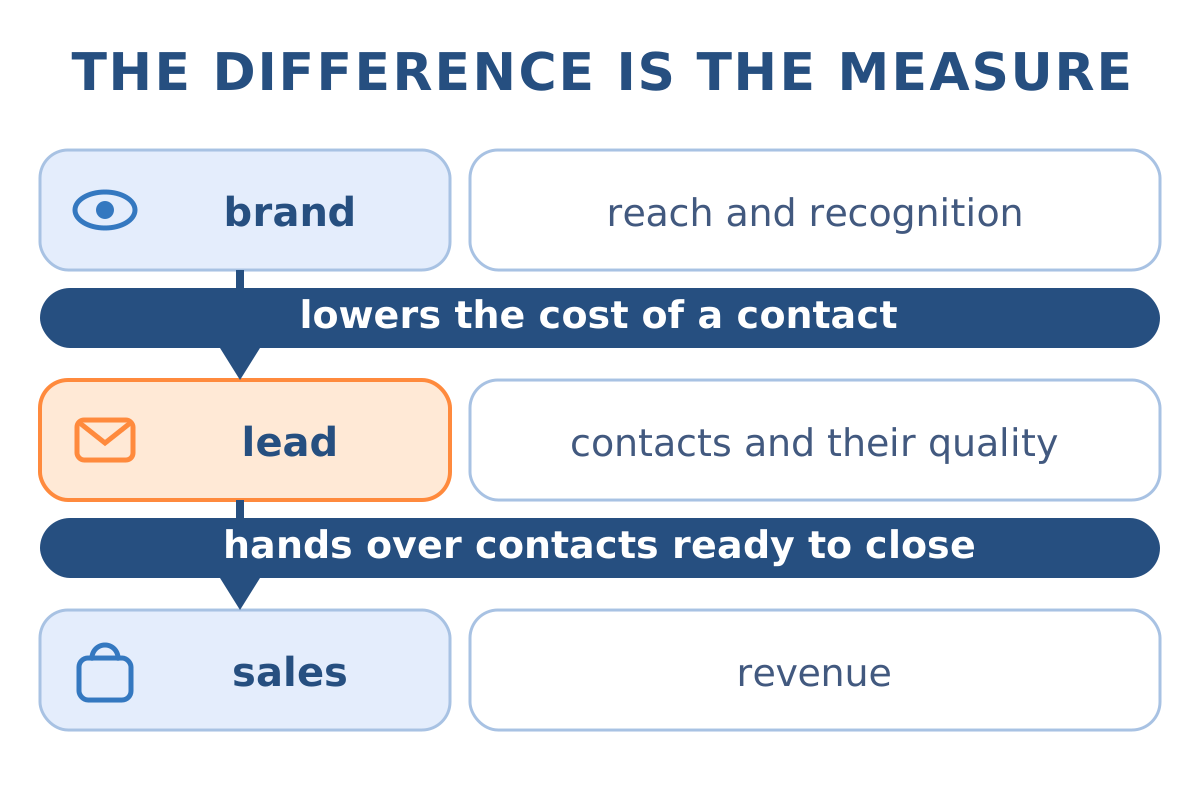
The distinction from a general marketing campaign is the measurement. A brand campaign is judged on reach and recognition, a sales campaign on revenue, and a lead campaign on contacts and their quality. In practice the three cooperate: a brand campaign lowers the cost of a lead campaign, because a recognised brand is one people will give their details to, and a lead campaign feeds the sales campaign with contacts ready to close.
Why do lead generation campaigns matter?
Lead generation campaigns matter because they are the point at which marketing spend becomes a countable asset — a named contact with a recorded interest, which can be qualified, worked and forecast against.
Three consequences follow from that property. A campaign converts an unbounded question, how is marketing performing, into a bounded one with a denominator: how many contacts, at what cost, of what quality. It produces evidence beyond the leads themselves, since the queries and messages that convert are the strongest available input to the content plan. And it makes revenue forecastable, because a known lead count multiplied by a known close rate gives a number that can be planned against.
That third point rests on having the close rate. On the drySEO laboratory's own B2B account 13.6% of commercial enquiries turned into orders — orders divided by commercial enquiries excluding noise, range 11.6–15.0% depending on the denominator, measured from full-year exports (drySEO lab data). With a figure like that established for your own funnel, a campaign target stops being an aspiration and becomes arithmetic.
What are the types of lead generation campaign?
Four types of campaign cover most B2B needs, and they differ in the intent of the person they reach.
Paid search
Advertising in a search engine reaches people already looking for a solution, which makes the intent the highest of any channel. It delivers from the first week and stops with the budget.
Professional network lead forms
Forms pre-filled from a professional profile, with targeting by role, sector and company size. The most precise targeting available in B2B, and the most expensive per contact.
Social lead ads
Instant forms completed inside the app from profile data. The lowest barrier to entry and the lowest cost per contact, which suits simpler offers and shorter decisions.
Organic campaigns (SEO and content)
Content attracts search traffic and a landing page converts it. The slowest to start and the lowest unit cost over a long horizon.
The choice follows two questions: where the target audience actually is, and what time horizon you have. A balanced B2B plan usually takes one channel that captures existing intent and one that reaches people who fit the profile without yet searching.
How do you run a lead generation campaign?
An effective campaign is built in six steps, and the order matters because each step constrains the next.
Set the goal and the audience
How many leads, at what cost, from whom. The audience definition is on Target Audience.
Build the ideal customer profile
In B2B the campaign targets companies of a specific sector and size before it targets individuals.
Prepare the lead magnet
The value for which a visitor will hand over contact details: a report, a calculator, a webinar, a quotation.
Choose the channel
From the four types above, according to where the audience is and what horizon you have.
Build the landing page and form
One goal, one message, a short form and a clear call to action. Every unnecessary field lowers conversion.
Measure and optimise
A/B tests of headlines, offers and forms. A campaign is a process rather than a single launch.
Step six needs a defined window before it can produce a verdict. Four to six weeks is the practical minimum for a B2B campaign: the first week or two calibrate targeting and creative, and the remainder supplies comparable data. A shorter reading mostly measures noise, which makes early verdicts a measure of impatience rather than of the channel.
What is the 3-3-3 rule for marketing?
No agreed 3-3-3 rule exists. The name circulates in several incompatible versions and none of them is published with a measurement behind it — which is the most useful thing to know before a campaign gets planned around one. The question underneath is the one worth answering: how a campaign should be phased, and what each phase is read against.
Three phases do the work, and the numbers that matter in them are the ones from your own account:
Calibration
The opening period, where targeting and creative are adjusted and the data is too thin to judge. Decisions here are about setup rather than performance.
Measurement
The middle period, where a comparable sample accumulates against a fixed definition of a lead. This is the phase most campaigns are cut short of reaching.
Decision
Scale, restructure or stop, on evidence — and with the definition that produced the evidence recorded, so the next campaign's numbers remain comparable.
Anyone quoting a named rule with specific numbers is worth asking one question: numbers measured on whose account, against which denominator. That question resolves most marketing rules of thumb quickly.
How do you measure a lead generation campaign?
Judge a campaign on four figures: cost per lead, landing page conversion rate, ad click-through rate, and return on investment across the whole.
Each answers a different question. Click-through rate says whether the message reaches the right people. Landing page conversion says whether the page keeps the promise the ad made. Cost per lead says what the combination costs. Return on investment settles whether it paid.
One warning belongs with any campaign report, because it changes the numbers rather than merely qualifying them. Measurement on the laboratory's own account showed the ad panel counting 1.4–1.9× fewer conversions than the CRM — leads carrying a campaign parameter found in the CRM, divided by the conversions counted in the panel, with a control from a third system agreeing to within 0.4 percentage points (drySEO lab data). The direction is one-sided: the panel sees fewer. A campaign judged solely on panel figures therefore understates its own output, and the gap varies between accounts, so it has to be measured rather than assumed.
Campaign structure contributes a second attribution problem. On the same account 46.2% of the budget carried no named country, with 27.1 percentage points of that coming from campaign types that carry no geography at all (drySEO lab data, cost with no named country ÷ account cost). Where a campaign type reports no geography, per-market performance contains a modelling assumption, and saying so alongside the comparison is what keeps the conclusion honest.
How much should you pay for a lead generation campaign?
What you should pay follows from your own numbers rather than from a rate card, and the derivation takes two inputs: what an order is worth to you, and what share of enquiries closes into an order.
Multiply your margin on an order by your close rate and you have the expected profit a single lead carries before anyone pays for it. A cost per lead that stays well under that figure is affordable, because most of that profit stays with you; one that approaches it is a campaign working for the media owner. The calculation runs on margin rather than revenue, because margin is what repays the cost of the lead.
Two things move the result enough to be worth calculating per market. Cost per click varied PLN 2.53 to PLN 10.55 across markets on the laboratory's own account, a 4.2× spread, with the whole account at PLN 6.77 — costs divided by clicks after summing rows (drySEO lab data). And close rate varies at least as much: alongside the measured 13.6% stands a directional observation from the laboratory's practice that on markets furthest from a client's core business the same ratio can run at roughly 5–6% (drySEO lab data, directional from practice, not an export — same denominator). Both inputs shifting by factors of this size is why a single campaign budget applied across markets misprices at least one of them. The full denominator analysis is in the cost guide.
What mistakes spoil a lead generation campaign?
Two beliefs spoil campaigns more often than budget does.
“A longer form filters out the casual — more fields mean better leads.” True up to a threshold, past which every field above the necessary minimum raises the abandonment rate. Data that can be completed later belongs after the conversion rather than in front of it.
“The campaign ends when the contact arrives.” A lead cools within days. A campaign without planned warming and a fast first contact converts budget into a list of dead addresses, which is why routing and follow-up are designed before launch rather than after the first leads arrive. The sequences are on Lead Nurturing.
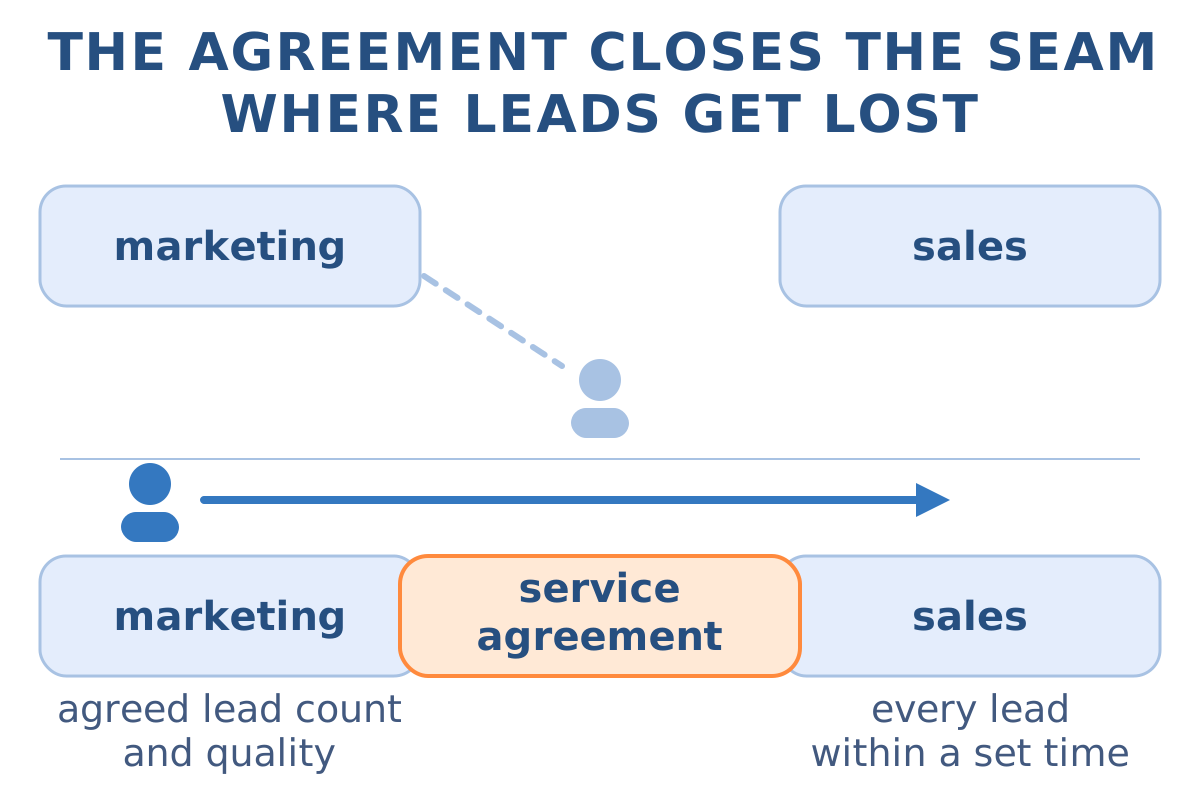
A third failure is organisational rather than tactical. Where marketing and sales work separately, an internal service agreement carries the campaign across the seam: marketing commits to a lead count and quality standard, sales commits to contacting every lead within a defined time. Campaign leads are lost at that boundary more often than at any point inside the campaign itself, and the criteria that make the commitment measurable are in the qualification guide.
Frequently asked questions
How long should a B2B lead generation campaign run?
Four to six weeks at minimum. The first week or two calibrate targeting and creative; the rest accumulates a comparable sample. Campaigns stopped earlier rarely gather enough data to support the decision they are stopped for.
Can a campaign run without an advertising budget?
Yes, in the organic form — content plus a landing page — which avoids click costs and requires months and consistent publishing. A paid campaign delivers leads from the first week. Running both is how the average cost per contact falls over time while volume is available immediately.
What is the difference between lead generation and demand generation?
Demand generation builds awareness of a problem among people who are not yet searching, using content available without a form. A lead generation campaign captures demand already expressed and converts it into a contactable record. The first shows up as growth in brand queries and direct visits; the second as enquiries and their cost.
Can you give an example of a lead generation campaign?
A paid search campaign on buying-intent phrases, pointing at a landing page offering a quotation, with submissions routed automatically to a named owner and a follow-up sequence behind them. Every element in that sentence is a measurement point, which is what separates a campaign from an advertisement.
How is campaign performance connected to lead quality?
Through the qualification rate. A campaign optimised on cost per lead alone will find the cheapest contacts available, which are rarely the ones that close. Optimising on cost per qualified lead points the same budget at a different audience.