
Content marketing for lead generation is the practice of attracting potential customers with content that solves their problem before any sales conversation happens, and then trading something genuinely useful for a contact detail. In B2B the content doubles as proof of competence — the supplier who explains the problem best earns the trust — which is why it is one of the main channels behind B2B lead generation. This guide covers the formats that work, how lead magnets trade value for a contact, the strategy in five steps, and how to measure any of it.
Why is content marketing essential for B2B lead generation?
Because most of a B2B buying decision now happens before anyone contacts a supplier. The cycle runs for weeks or months, a group of people is involved, and the research is done privately. Content is what the buying company reads before it gets in touch — a supplier with none is absent from the decision entirely.
There is a second effect, visible in measurement rather than in theory. A knowledge-driven site attracts demand from markets where no money is being spent at all: in one year of the lab's own funnel, advertising ran in 22 countries while commercial enquiries arrived from 185 and traffic from 243 (drySEO lab data — country counts over one account, one site, one full year). Content is the only channel that produces that asymmetry, because an answer published once keeps working in places no budget reaches.
The same property is now doing a second job. A growing share of B2B research starts in a conversation with an AI assistant, and language models cite sources that contribute something of their own — original data, first-hand examples, numbers nobody else has. Content that paraphrases freely available knowledge gives a model no reason to cite it. How to position a company on both sides of that shift is covered in our AI SEO guide.
What types of content work best for lead generation?
Six formats cover most of what a business buyer needs:
Expert articles
answer the questions people type into a search box — the main source of organic traffic and of entries into the funnel.
Case studies
are bottom-of-funnel proof: problem, solution, result at a comparable company. They remove the risk in “will this work here”.
Reports built on your own data
are the premium magnet. Decision-makers will trade a contact for numbers that exist nowhere else, and the report makes you a primary source rather than a commentator.
Webinars
educate and qualify at once: someone who spends an hour on a topic sits closer to a purchase than someone who read a paragraph.
Expert video
gives the company a face, which matters because B2B buys from people.
Podcasts
are niche but loyal — a listener returns weekly in a way a blog reader does not.
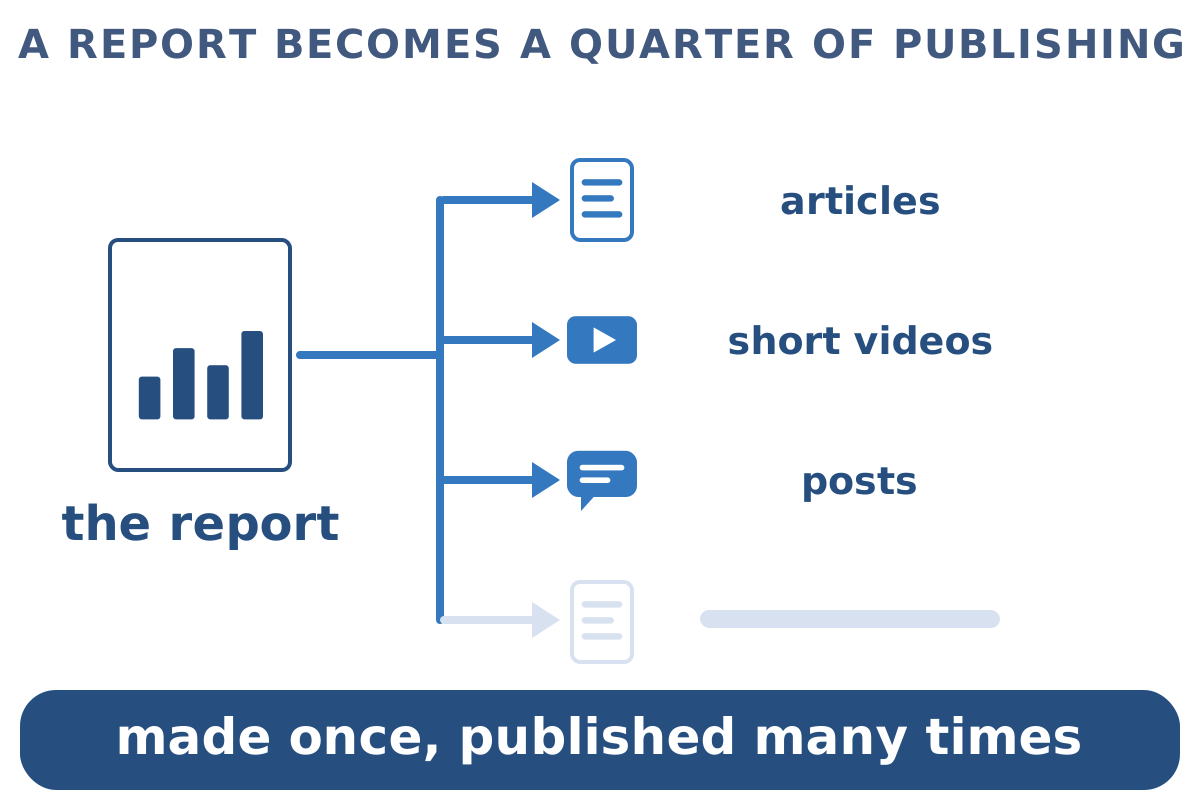
These formats feed each other rather than compete. A report becomes a series of articles, a webinar becomes short videos, a case study becomes a LinkedIn post. That recycling scales reach without multiplying production cost, and it is the difference between a content operation and a publishing hobby.
Lead magnets: how content trades value for a contact
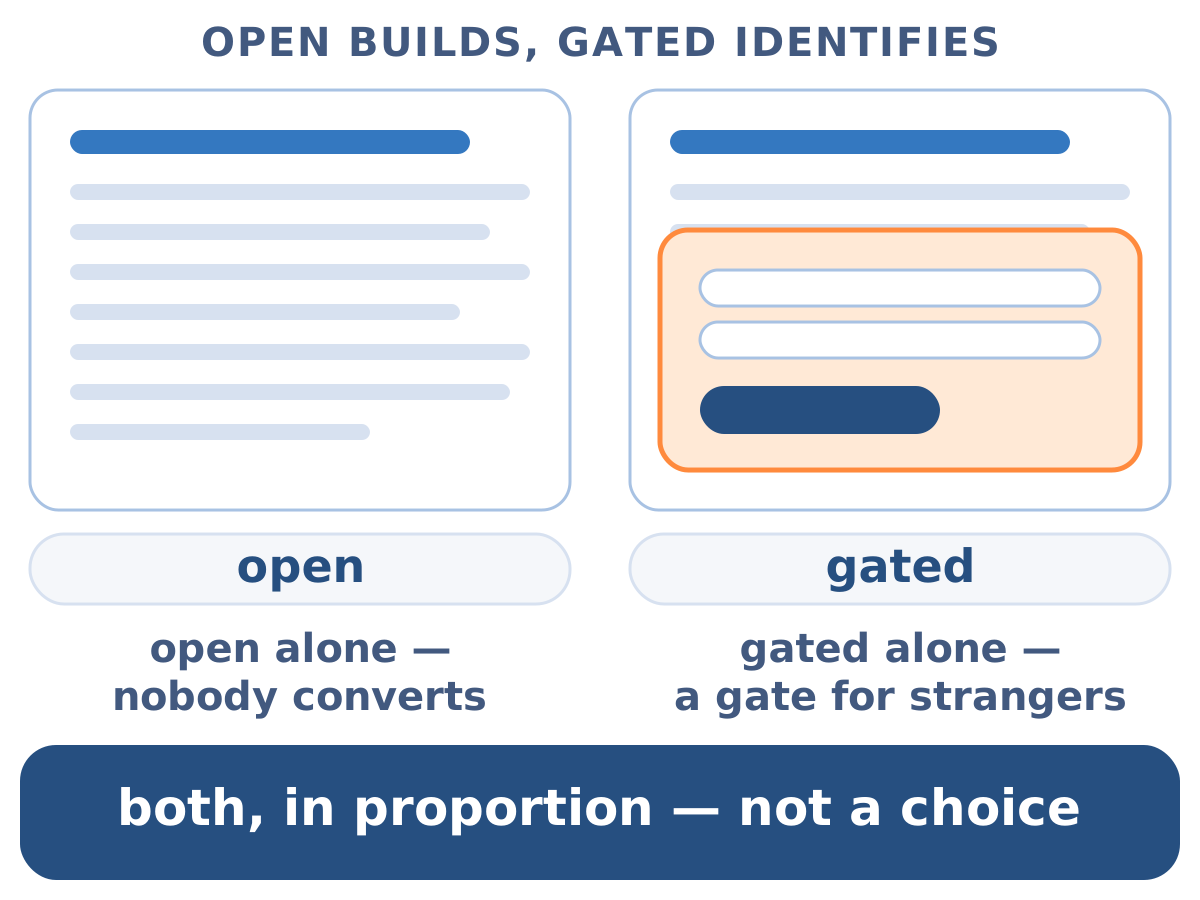
A lead magnet is content released in exchange for contact data — the user gets value, the company gets a lead. The primary split is between open content, which builds reach and trust, and gated content, which identifies who is reading. A magnet works in proportion to how useful it is right now:
| lead magnet type | character | role |
|---|---|---|
| Interactive tools (calculator, audit, quiz) | an immediate result for the user | the strongest trade — diagnosis on the spot |
| Templates and checklists | something to work with today | good conversion at low production cost |
| Webinar | live education | magnet and readiness filter in one |
| Report or original research | unique data | premium for decision-makers; builds authority |
| PDF ebook | static knowledge | weakest — more often opened than read |
Signup happens on a landing page with a short form, and how such a page is built and judged is covered in the conversion guide. Collect the minimum number of fields and fill the gaps on later downloads through progressive profiling, rather than deterring the first contact with a long form.
How do you build a content marketing strategy for lead generation?
Five steps:
Start from the buyer persona
Topics come from the questions, pains and objections of real customers, not from a keyword tool alone — the profile is built in B2B Buyer Persona.
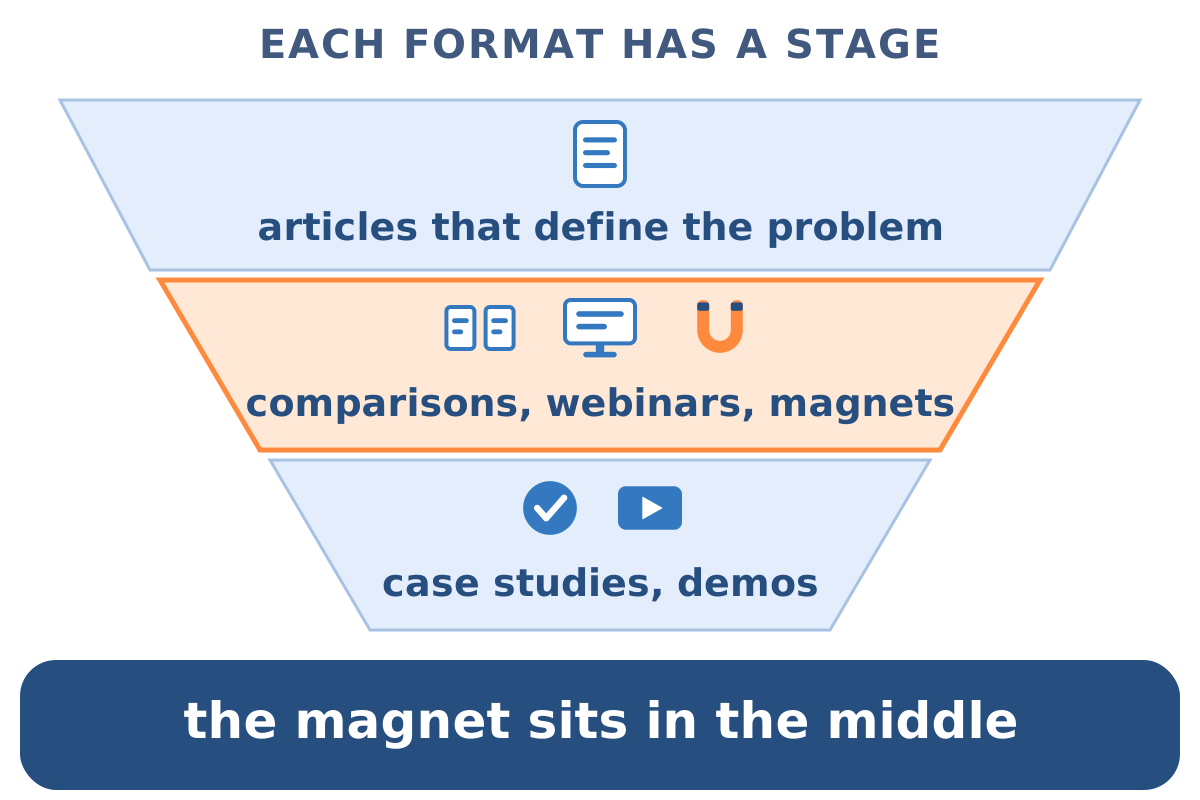
Map content to funnel stages
Top: articles that define the problem. Middle: comparisons, webinars, magnets. Bottom: case studies, demos, proof.
Set a calendar you can sustain
Regularity beats bursts — two good pieces a month for a year build more than ten in one quarter followed by silence.
Plan distribution as seriously as production
Content without distribution does not exist: organic search, LinkedIn Lead Generation, your own list by email, and format recycling across all three.
Measure from the signup, not from the like
The goal is a lead, so measurement starts at signups per asset and ends at the content's influence on closed deals.
What is the difference between demand generation and lead generation content?
Two roles for content, routinely confused. Demand generation content is open: it builds awareness of a problem and trust in the brand among people who are not yet looking for anything — blog posts, podcasts, video, social. Lead generation content is gated or highly practical: it identifies a specific reader who trades a contact for value — reports, calculators, webinars, demos.
A strategy needs both in proportion rather than a choice between them. Demand generation alone builds an audience nobody converts; lead generation alone puts gates in front of people who have never heard of the company and will simply leave.
What about the 3-3-3, 70-20-10, five C's and 5-5-5 rules?
All four circulate widely, each in several incompatible versions, and none of them is published with a measurement behind it. That is the most useful thing to know about them, so here is the honest summary rather than a fifth version:
70-20-10
is quoted as an allocation of effort or budget between proven work, adjacent bets and experiments. Sources disagree on what each share buys.
3-3-3
appears as a rule about structuring attention — the first seconds, the first lines, the first screen — with the units differing between tellings.
The five C's
appear as a checklist of content qualities, and the lists themselves differ from source to source.
5-5-5
is quoted as a social cadence splitting engagement between commenting, connecting and publishing.
Each carries one structural idea worth keeping: spend most of your effort on what already works while reserving some for experiments, earn attention early, keep quality consistent, and engage more than you broadcast. The specific numbers are borrowed from someone else's account.
A ratio without a stated denominator is a slogan, not a result. The version that matters is the one you measure: track which cadence and which content mix produce signups and enquiries in your own data, and within a quarter you will have a rule fitted to your audience instead of to somebody else's. That is exactly the discipline set out in the lead generation metrics guide.
How do you measure the success of content marketing for lead generation?
Through a chain, with every link carrying its own denominator: traffic to the content → signups per asset, which tells you which magnet works → qualified leads originating from content → the share of won deals whose buyers read that content beforehand.
Attribution here will never be complete, because a buyer reads for months and converts once. That is a reason to read results as trends and at the level of individual assets, not a reason to abandon the measurement — and certainly not a reason to fall back on reach figures, which rise whenever activity rises and therefore cannot tell you anything.
Frequently asked questions
How long before content marketing generates leads?
First leads from magnets can arrive within weeks when the content is distributed to an audience that already exists — a list, a LinkedIn following. The organic channel takes months to accumulate positions and traffic, which is why content is planned in quarters rather than campaigns.
Blog or social media — where should a B2B company start?
With a blog on your own domain, distributed through LinkedIn and email. Content on your own site works for years in search and belongs to the company; a social post lives for days at an algorithm's discretion. In B2B, social is a distribution channel rather than the home of the content.
What are the most common mistakes?
Writing about yourself instead of the customer's problem; publishing without distributing; gating everything, which stops people who are only just meeting the brand; irregular output, which damages both the audience and the search signals; and measuring reach instead of signups.
What is the difference between a subscriber and a lead?
A subscriber signed up for knowledge and has shown no buying intent; treat them as a buyer and they unsubscribe. They become a lead at a business signal — a case study download, attendance at a product webinar, a visit to a commercial page. Keeping the two statuses apart protects both relationships.