
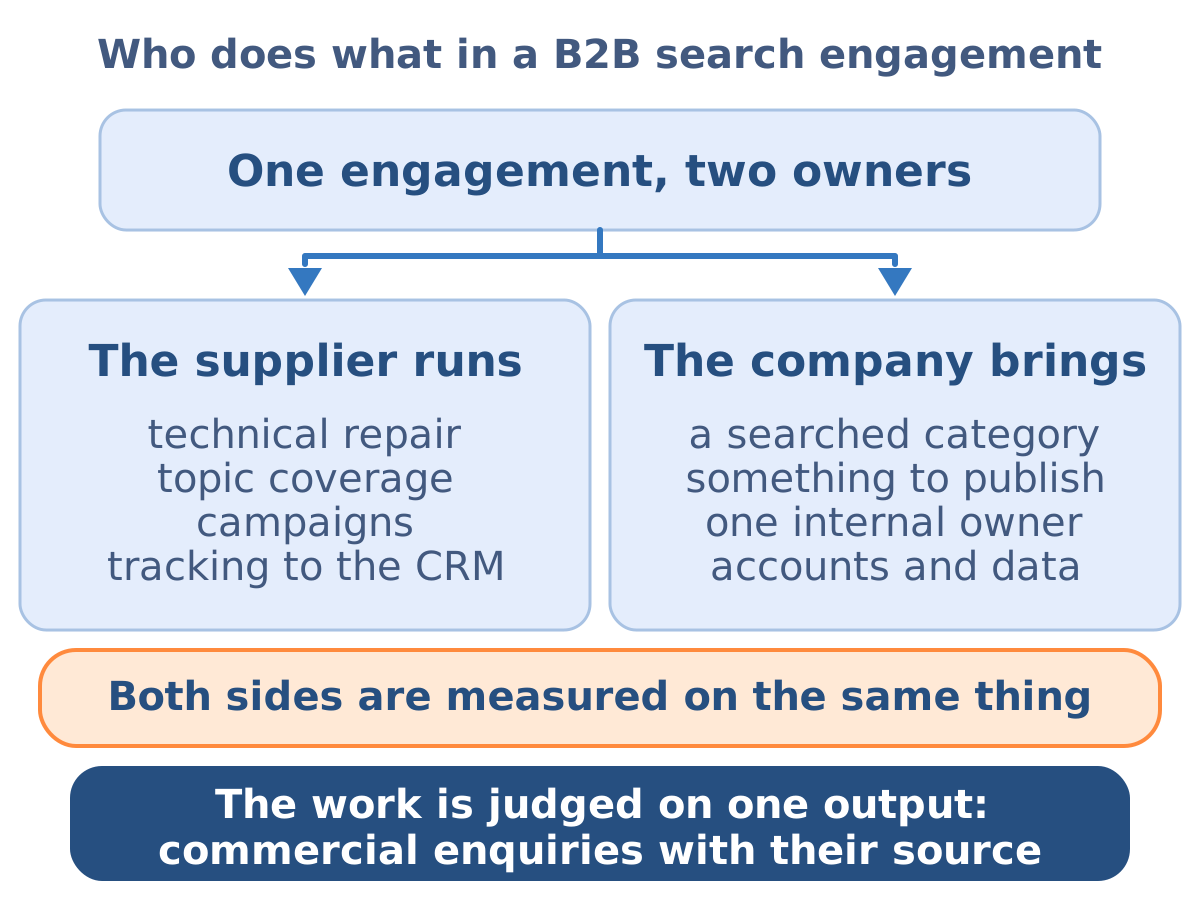
A B2B search supplier is judged on one output: commercial enquiries from people who went looking for a solution to their own problem. Everything the work is made of — technical repair, topic coverage, campaigns, measurement — earns its place by bringing that output closer. This page sets out what the work contains, how it is settled, what to check before choosing a supplier, and how long the result takes to arrive. The whole method behind it is collected in our B2B SEO guide.
What does an SEO and SEM company do for a B2B business?
An SEO and SEM company builds and runs the search channel so that a business receives commercial enquiries from it. SEM, search engine marketing, is the wider term and covers both halves of search: the paid campaigns that buy visibility immediately, and the organic work that earns it over months and keeps it afterwards. In a business market the two halves answer different questions — advertising finds out which phrases carry buyers, organic coverage holds the buyer through a decision that runs for months — so they are usually run together and reported against the same threshold.
The unit of account matters more than the discipline. A supplier reporting positions and impressions is describing activity; a supplier reporting commercial enquiries with their source is describing the thing the company can spend. The orders of magnitude show why the second is worth insisting on: a knowledge-led site turns 0.8% of visits into commercial enquiries, 0.7% after noise removal (denominator: all site users ÷ commercial enquiries in the CRM; drySEO lab data), and 13.6% of those enquiries end in an order (denominator: orders ÷ commercial enquiries after noise removal; drySEO lab data). Two thresholds, each with its own denominator, and only both together describe revenue.
What is included in SEO and SEM services?
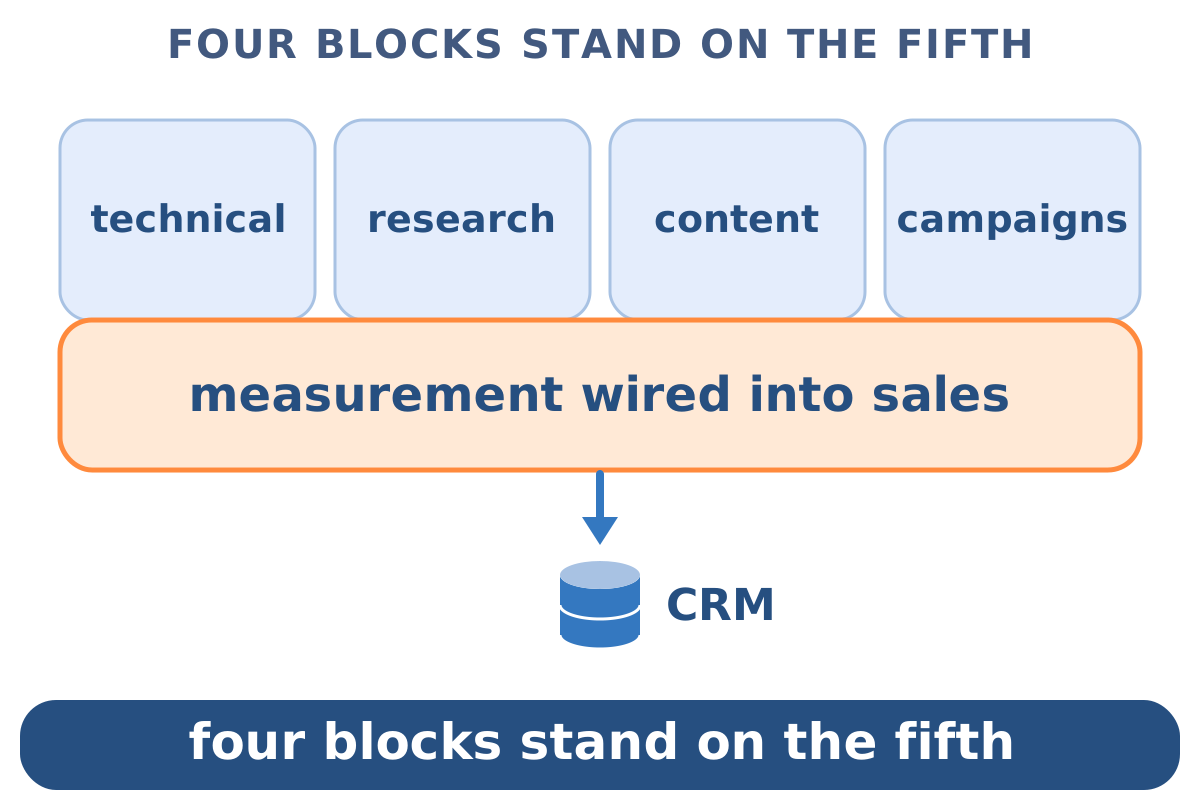
The work divides into five blocks, and a proposal that covers four of them will under-deliver on the fifth.
Technical availability
Crawling, indexing, rendering, speed, the mobile version, redirects and duplicates. A page outside the index produces nothing whatever its quality, which makes this block a precondition rather than a lever.
Query and entity research
The map of what the market actually types, ranked by the value of the enquiry a phrase could produce rather than by its volume.
Content that covers a decision
Pillar pages and clusters written for a professional reader, structured so that individual passages answer individual questions on their own.
Paid search campaigns
Account structure, intent keywords with negatives, ads matched to the query and a landing page built for one action — set out in full in the paid search setup for B2B lead generation.
Measurement wired into sales
A campaign parameter carried from the click to the CRM record, so that every enquiry can be attributed and every channel compared on the same basis.
The full scope, as delivered, is described in our SEO and SEM services.
What can a supplier promise, and what can it not?
Those five blocks describe the work. What a supplier can commit to is a shorter list than the work itself, and the difference between the two lists is worth settling before an agreement is signed.
What can be promised is inputs and definitions. The scope of the work; who owns the advertising account, the analytics property and the conversion data; which system holds the binding count of enquiries and which enquiries are excluded from it as noise; the reporting cadence; the review points and who decides what at each one. Every item on that list sits inside the supplier's control and can be written down before the work starts.
What cannot be promised is the result, because a third party produces it. A position in search is the output of a ranking system that neither side of the agreement operates, that changes without notice, and that returns different results to different people asking the same question. A commitment to a named position, to a date for it, or to a number of enquiries a month is a commitment to something the supplier does not control.
A promised number is also an uncheckable number until its denominator is named. The same spend on the account measured in this laboratory yields different costs per lead depending on which leads are counted, and the advertising panel reports fewer conversions than the system holding the orders. A promise of so many leads a month that does not say which system counts them, and what is excluded from the count as noise, cannot be tested against anything — it can only be declared met.
Three claims are worth reading as warning signs for that reason: a guaranteed position, a guaranteed count with no denominator, and any claim of privileged access to the search engine. None of the three can be checked by the buyer before the money is committed. A position can at least be read off afterwards; the other two cannot be read off at any point.
Two of those signals have a published counterpart in Google's own guidance on hiring an SEO, which says plainly that no one can guarantee a particular ranking in search, and that Google does not endorse third-party SEO tools — so a supplier or a tool presenting itself as Google-approved is making a claim its supposed source does not make. The same document draws one boundary worth applying before any agreement exists: at the audit stage a prospective supplier gets read access to Search Console, not write access.
What does an SEO and SEM company cost?
Search work in this laboratory is settled per lead, which turns the question of cost into a question of arithmetic the buyer can do themselves. What one enquiry is worth follows from the value of an order multiplied by the rate at which enquiries become orders; the price of producing one sits underneath that figure or the arrangement makes no sense for either side. Nothing here depends on an agency rate card, which is why this page carries no figures for the work: the number that matters is derived from the buyer's own order value and their own close rate, and it is different for every company.
Two measurements show why a quoted market figure travels badly. On one B2B account the cost per lead from advertising has three legitimate values at once, depending on whether the denominator is all of a market's leads, leads carrying a campaign parameter, or conversions counted by the advertising panel — and the spread between them is 6.2× (denominator: the three definitions applied to one year of one account; the spread is definitional, a property of the three denominators; drySEO lab data). Cost per click on the same account varied 4.2× between its cheapest and its most expensive market (denominator: cost ÷ clicks, summed across rows per market before dividing — an average of averages diverges here by up to 11%; drySEO lab data). A single number carries its definition and its market with it, so a figure quoted from elsewhere is right in one case and wrong in the rest. How the figure is built for a given company is worked through in our cost-per-lead guide.
How do you choose a supplier for B2B search?
Five checks settle most of it, and all five can be made before any money changes hands.
Ask what counts as the result
A supplier who answers “commercial enquiries in your CRM” is agreeing to be measured on the same thing the company is measured on. A supplier who answers “rankings” is agreeing to be measured on a leading indicator.
Ask for a denominator
Every figure in a proposal should survive the question “divided by what?”. A conversion rate quoted without its population, or a cost per lead quoted without saying which leads were counted, is a number that cannot be checked afterwards.
Ask who owns the accounts
The advertising account, the analytics property and the conversion data should belong to the company, whoever operates them. This single condition decides whether the work is portable.
Ask how the two halves of search inform each other
Phrases that convert in the paid account are the ready-made topic list for organic content, and organic traffic that left without converting is the natural audience for remarketing. A supplier who runs the halves as separate projects forfeits both effects.
Ask what happens in month seven
The channel reaches a commercial result on a horizon of quarters, so the reporting cadence, the review points and the decision rights for that period should be written down before the work starts.
How long does SEO and SEM take to show results?
Two clocks run at once in an engagement. Paid campaigns start on day one and the first enquiries can arrive the same week, but a fair read on a campaign still needs four to six weeks, because the algorithm has to pass its learning phase and the conversion data has to reach a size at which decisions stop being coincidence. The organic clock runs in months and its stages arrive in a fixed order, which is set out, with the reference point measured in drySEO lab practice, on the route from a search visit to an enquiry in the CRM.
For a contract, the consequence is the review point. An enquiry carries the buyer's own decision cycle after it is sent, so an outside team cannot be read off its first month — and what the reading will be made of has to be agreed before the work starts, not after the first report.
Is SEO still worth it now that AI answers the question?
Yes, on condition that the material contributes something absent from a model's corpus: proprietary data with a denominator, experience from real implementations, original work. A short synthesis in a search interface closes simple questions; a decision worth six figures still sends the buyer to sources, and the sources are chosen from material that exceeds the synthesis. Content structured for citation also serves as an input to the generated answer, which keeps a brand in circulation on queries that end without a click. How visibility behaves where a model composes the answer is settled in our AI SEO guide.
The question decides a budget before any scope is discussed. A buyer who suspects the channel is about to stop producing enquiries will not weigh the work, the timeline or the settlement — so a supplier who cannot answer it is negotiating against a doubt that was never put on the table.
Is Google Ads SEO or SEM?
Google Ads is SEM. Search engine marketing is the wider category and contains both paid search advertising and search engine optimisation; Google Ads is the paid half, settled per click, and SEO is the organic half, settled in the time and expertise it takes to earn a position. The two are often set against each other in a market that uses “SEM” loosely to mean advertising alone, and the practical consequence is small: both halves lead to the same form, so they are compared on the cost and the quality of the enquiry they produce, not on which label they wear.
The quality difference is measurable. On one B2B account, enquiries arriving through advertising closed at 15.25% against 11.82% for organic enquiries submitted through the same form — a ratio of 1.29×, significant at p ≈ 0.014 (denominator: orders ÷ enquiries from the same form, channel read from the campaign parameter, with the direct pool held out separately; drySEO lab data). Both halves earned their place, and the account kept both.
What should the reporting cover?
Reporting covers commercial enquiries with their attributed source, the share that qualifies, the close rate to order, and the cost of each — with a denominator stated for every one. Positions, impressions and traffic belong in the report as leading indicators that explain movement in those four.
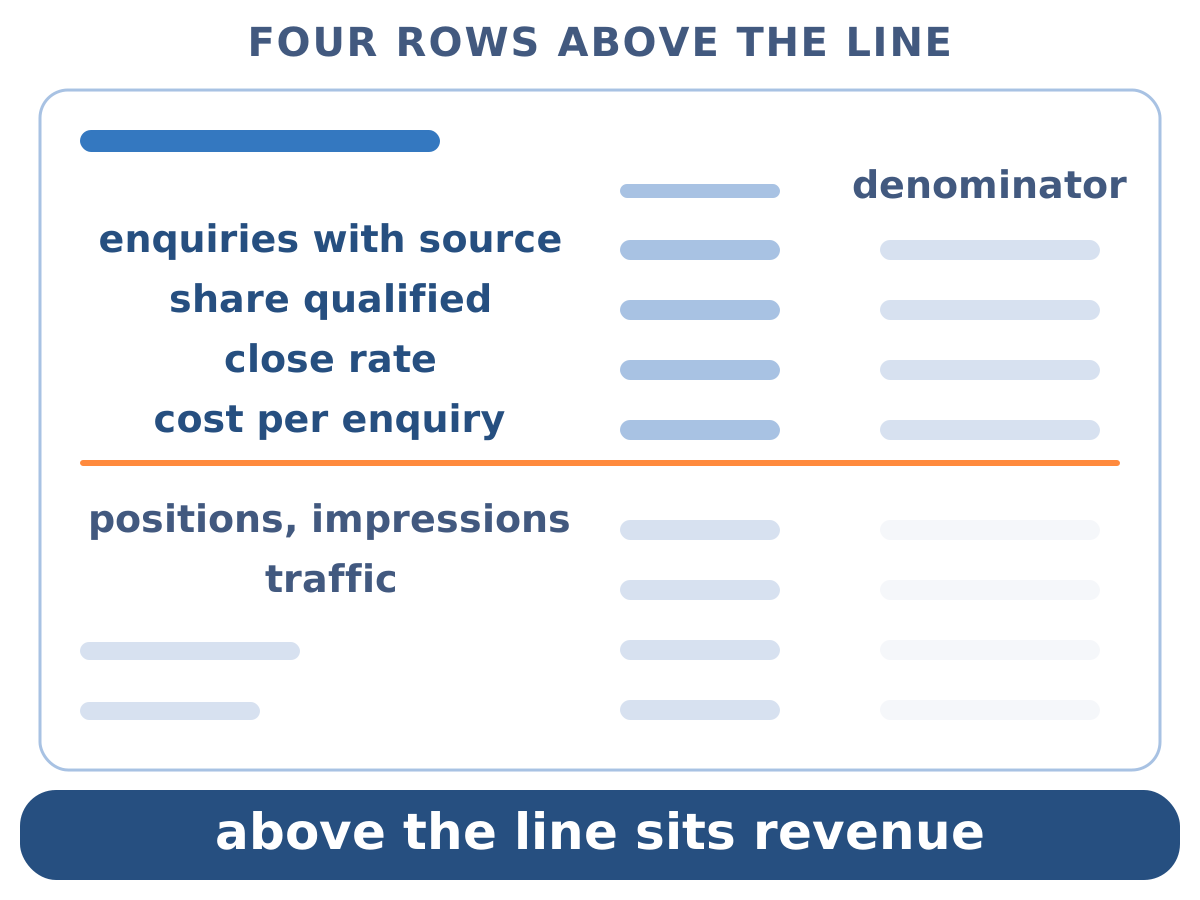
One correction belongs in every report on this channel. An advertising panel reports only what it can attribute, and comparing enquiries tagged with a campaign parameter in the CRM against the panel's own conversions gives a difference of 1.4–1.9×, always in the same direction — the panel sees fewer (denominator: campaign-parameter leads in the CRM ÷ panel conversions; a control from a third system agreed within 0.4 percentage points; drySEO lab data). Treating a panel figure as a lower bound and reconciling it against the sales system is the difference between a report and a table. Which indicators to define and how is set out in the metrics guide.
FAQ
What is the difference between SEO and SEM?
SEO covers the work that builds visibility in organic results. SEM is the wider term and covers both SEO and paid campaigns in the search engine. Both channels lead to the same form, so they are compared on the cost and the quality of the commercial enquiry they produce.
Should one supplier run both SEO and paid search?
It is the arrangement that produces the most from the same budget, because the two halves feed each other: converting phrases from the paid account become the organic content plan, and organic visitors who left without converting become the remarketing audience. Where the halves sit with separate suppliers, both effects depend on somebody inside the company carrying data between them.
What does a B2B search programme need from the company itself?
Three things: a category that buyers actually search for, subject matter worth publishing, and one person internally who owns the decision long enough for the channel to reach its result. Where those hold, the rest is execution.
How is the work settled?
Per lead. The value of one enquiry follows from order value multiplied by close rate, and the settlement sits underneath that figure — which makes the arrangement checkable by the buyer with their own two numbers.